
A good wooden cutting board can last for years, even decades, if you look after it. Wood is kind to knife edges, looks beautiful on the table and, cared for properly, is a hygienic surface to prepare food on. Here is the simple routine we recommend for every board that leaves our New Hanover workshop.
After every use: wash, rinse, dry
- Scrape off food, then wash the board by hand with warm water and a little dish soap.
- Rinse it well and wipe it dry with a clean cloth.
- Stand it upright or on its edge to dry completely, so air reaches both sides.
Never soak a wooden board in the sink and never put it in the dishwasher. Long exposure to water and heat makes wood swell, warp and crack.
Use separate boards
Food-safety advice from the University of Maine Cooperative Extension is to keep one board for raw meat, poultry and fish and another for bread, fruit and vegetables, to avoid cross-contamination. A heavy chopping board for meat prep and a smaller cheese board or bread board for ready-to-eat food is a practical pair.
Sanitise now and then
After cutting raw meat, or every week or so, give the board a deeper clean. Wipe it with white vinegar, or use a diluted bleach solution as recommended by food-safety guidance, then rinse and dry thoroughly. Rubbing coarse salt and half a lemon over the surface also lifts stains and smells.
Oil the board regularly
Oiling stops wood drying out, keeps moisture and food juices from soaking in and brings back the colour of the grain.
- Make sure the board is clean and completely dry.
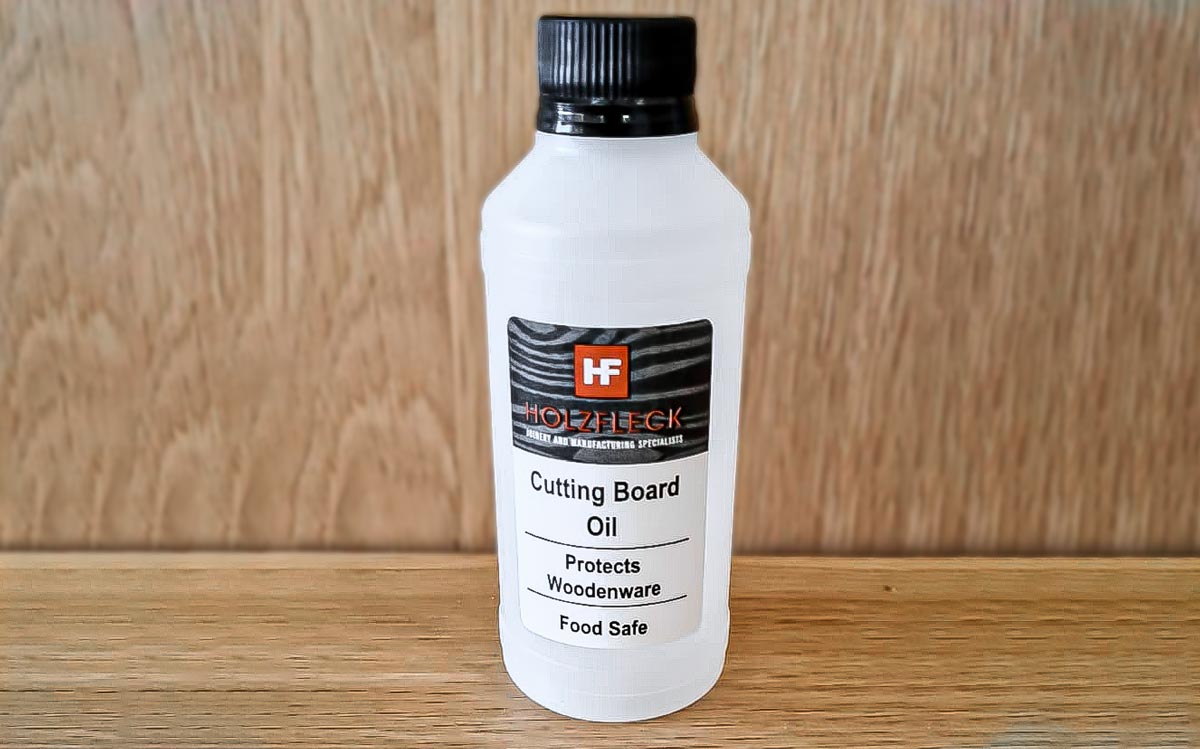
- Pour a small amount of Holzfleck Cutting Board Oil onto the surface.
- Rub it in with a soft cloth, following the direction of the grain, and coat the sides and edges too.
- Leave it to soak in and dry before using the board again.
Re-apply oil about once a month, or whenever the wood looks pale and dry. A new board benefits from a few coats in its first weeks. Avoid cooking oils such as olive or sunflower oil, which can turn rancid over time.
Deal with cuts, stains and smells
Light knife marks are normal. Deep grooves can trap food and bacteria, so sand them out with fine sandpaper, wipe off the dust and re-oil. If a board has deep cracks or grooves you cannot sand away, it is time to replace it.
Boards with juice grooves
Steak boards such as our Big Steak Board have a groove that catches juices from resting meat. Clean the groove carefully with a brush after use, because that is where juices collect.
More kitchen and braai guides
Choosing gear for your next braai? Read how to choose a biltong cutter that lasts and our guide to cooking a mini potjie on a gel stand. You can browse all our handmade wooden cutting boards and serving boards in the shop.