
Every South African kitchen has an unsung hero. It takes the knife blows on a Tuesday night, carries the steak to the table on Saturday and holds the cheese, biltong and olives when friends pop round. It is the humble wooden board, and choosing the right one makes cooking easier, braaing tidier and entertaining a lot more fun.
This guide covers everything we have learnt from making boards by hand in our New Hanover workshop in KwaZulu-Natal: the difference between cutting, chopping and serving boards, which wood works best, what the food-safety research actually says, the right size for every job, how to build a braai platter that disappears in minutes, and how to keep a board going for years.
Quick answer: For most homes, two wooden boards cover 90% of jobs: a thick, heavy chopping board for raw meat and big prep, and a lighter cutting or bread board for bread, fruit, cheese and anything ready to eat. Add a steak board with a juice groove if you braai often, and a serving or cheese board if you love to entertain. Choose solid wood, wash it by hand, dry it upright and oil it about once a month.
In this guide
- Why wood still wins (and what the science says)
- Cutting vs chopping vs serving boards
- Which board for which job
- The best wood for cutting boards in South Africa
- Wood vs plastic vs bamboo vs glass
- How to build a braai platter board
- Care in 60 seconds, and when to replace a board
- Wooden boards as gifts, by budget
- Frequently asked questions
Why wood still wins (and what the science says)
Plastic boards arrived in kitchens with a promise: easier to clean, so safer. It sounded logical, so in the late 1980s a food microbiologist at the University of California, Davis, Dean Cliver, set out to prove it. His team contaminated new and used plastic and wooden boards with bacteria such as E. coli and Salmonella and tried to recover them. The result surprised everyone, including the researchers.
In the published 1994 study in the Journal of Food Protection, bacteria were readily recovered from plastic for minutes to hours, and multiplied if left overnight. Recoveries from the wooden boards were generally lower, whether the boards were new or well used. Wood draws moisture (and the bacteria in it) away from the surface, where they struggle to survive as the board dries.
Later research has added nuance rather than overturning this. Food-safety specialists at North Carolina State University point out that knife grooves are the real enemy on any board, and that fine-grained hardwoods resist deep scoring better than soft, coarse-grained woods. A 2025 hygiene study of wooden cutting boards in the same journal revisits wood’s porous structure and how it behaves after cleaning.
Myth buster: “Wooden boards are unhygienic.” Not true. The USDA’s Food Safety and Inspection Service says you can choose either wood or a non-porous surface. What matters far more is that you keep raw meat separate, wash the board after every use, dry it properly and replace it once it is deeply scored.
That last point is official guidance too. The USDA Food Safety and Inspection Service recommends one board for raw meat, poultry and seafood and another for bread, produce and ready-to-eat food, and advises replacing any board, plastic or wood, once it develops hard-to-clean grooves. Some food scientists still prefer a plastic board for raw chicken because it can go in a dishwasher. Whatever you choose, give raw meat its own board.
Beyond hygiene, wood has three everyday advantages. It is kinder to knife edges, so your knives stay sharp for longer. A thick wooden board is heavy enough not to slide around the counter. And it looks good enough to carry straight to the table, which saves washing a platter.
Cutting board vs chopping board vs serving board: what is the difference?
South Africans use “cutting board” and “chopping board” interchangeably, and that is fine. In practice, though, boards are made for different jobs, and the job decides the thickness, size and features you want. Here is a quick way to tell them apart.
| Board | Main job | Look for | Typical size | Holzfleck example |
|---|---|---|---|---|
| Cutting board | Everyday slicing of fruit, veg, bread and cheese | Flat, smooth surface; light enough to lift with one hand | About 25 × 40 cm | Bread Board, 45.5 × 25 cm |
| Chopping board | Heavy prep, meat, big batches for a potjie | Thick (3 cm+), heavy, stable; does not slide | About 33 × 45 cm or larger | Chopping Board, 3.9 cm thick |
| Steak or carving board | Resting and carving braai meat and roasts | Juice groove around the edge | 40 × 60 cm for a family braai | Big Steak Board |
| Serving or platter board | Taking food to the table; grazing platters | Good looks, handle or bowl cut-outs | Long and narrow or round | Round board with 3 bowls |
| Cheese board | Cheese, salami and snacks at the table or picnic | Compact and light | About 17 × 28 cm | Cheese Board |
| Pizza board or paddle | Slicing and serving pizza, flatbreads and tarts | Round or with a handle, big enough for a large pizza | 38 cm across | Pizza Board |
Notice that the difference is less about the wood and more about thickness, weight and features. A board that is perfect for slicing a baguette is miserable for breaking down a leg of lamb, and the other way round.
Which board for which job? A board-by-board guide
The everyday cutting board
This is the board you will reach for most often: cutting tomatoes for a salad, slicing an apple for the lunchbox, halving a loaf. It should be light enough to lift and rinse with one hand, but big enough that food does not spill over the edges. Around 25 × 40 cm suits most kitchens. Our Bread Board doubles as a great everyday board for ready-to-eat food.
The heavy chopping board (your raw-meat board)

A serious chopping board is thick, heavy and stable. When you are cutting chicken pieces for a curry or trimming a brisket, the last thing you want is a board that slides. Weight is a safety feature here. Our Chopping Board is almost 4 cm thick and weighs nearly 4 kg, so it stays where you put it. Make this your dedicated raw-meat board, and keep it separate from the board you use for bread and salads.
Pro tip: Put a damp dishcloth or a piece of non-slip mat under any board before you start cutting. Even a heavy board will then never shift, however hard you chop.
Steak and braai boards with a juice groove
Any braai master knows the moment: the steak comes off the coals, rests for five minutes and leaves a puddle of juice on the plate. A steak board with a groove around the edge catches those juices before they reach the tablecloth, and lets you carve and serve on the same board. Our Big Steak Board (60 × 40 cm) takes several steaks or a whole picanha, the Small Steak Board suits two to four people, and the Serving Steak Board adds two sauce bowls for dipping. Browse all of them under grooved steak boards.
Bread and baguette boards
Bread is messy. A dedicated bread board keeps crumbs in one place and gives your bread knife enough room to work. Long, narrow boards suit baguettes and ciabatta, while a handle makes it easy to carry a sliced loaf to the table. Try the French Bread Board for whole loaves or the Baguette Board with Handle for a stick of French bread with your soup.
Cheese, charcuterie and platter boards
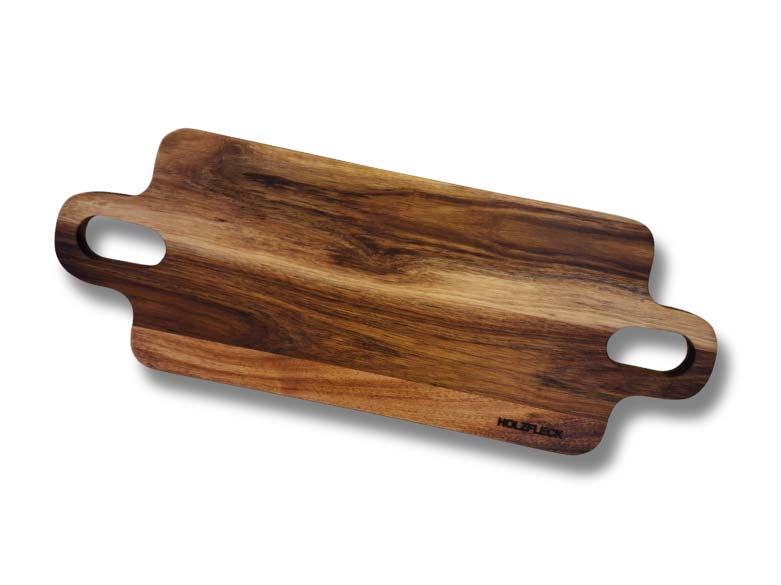
Grazing tables have taken over South African get-togethers, and the board is half the show. For two or three people, a compact Cheese Board is plenty. For a crowd, go long or round and let the board do the decorating. Boards with built-in bowls are clever: dips, olives and chutney sit in the cut-outs instead of sliding around in little ramekins. See our serving boards for single-bowl to three-bowl designs.
Pizza boards and paddles

With home pizza ovens (and Friday-night takeaways) more popular than ever, a proper pizza board earns its place. It gives your pizza wheel a firm surface, protects the table and looks the part. Our round Pizza Board is 38 cm across, and the blackwood Pizza Paddle has a handle for serving.
Heart boards and gift boards
Some boards are as much about the occasion as the cooking. Heart-shaped boards are popular for anniversaries, Valentine’s Day, weddings and “just because” gifts. The Big Heart Board is large enough for a romantic cheese platter for two.
The best wood for cutting boards in South Africa
Not every timber makes a good board. The ideal board wood is hard enough to resist deep knife scoring, fine enough in grain to clean well, stable enough not to warp in our humid summers and safe for food contact. Here is how the woods we use, and a few others you will come across, compare in plain language.
- Saligna (Eucalyptus grandis): a plantation-grown hardwood that is widely grown in South Africa. It is attractive, reasonably hard and readily available, which keeps boards affordable. Our everyday boards combine pine with saligna.
- Blackwood (Acacia melanoxylon): a dense, beautifully figured timber with rich brown tones and a lovely sheen once oiled. It makes premium serving and statement boards, like those in our Blackwood Country Range.
- Pine: a softwood that is light and gentle on knives. It is a sensible partner for harder woods in larger boards, but on its own it scores more easily, so oiling and sanding matter more.
- Bamboo: technically a grass. It is hard and cheap, but harder on knife edges and usually held together with a lot of glue.
- Indigenous hardwoods such as kiaat look stunning, but they are scarcer and better suited to furniture than to a board that will be cut on every day.
Wood scientists measure hardness with the Janka hardness test, which records how much force it takes to push a steel ball halfway into the wood. Harder is not always better for a board: very hard woods blunt knives faster, while very soft woods scar quickly. The sweet spot is a moderately hard, close-grained wood. If you are curious about local timbers in general, our guide to South African wood types goes deeper.
End grain, edge grain and face grain: does it matter?
You may see these terms on premium boards. Face-grain boards show the wide, flat face of the plank and display the grain beautifully. Edge-grain boards are made from strips glued side by side and are very stable. End-grain boards look like a chessboard of little squares: the knife slips between the wood fibres instead of cutting across them, so they are kind to knives but heavier and more expensive. For a home kitchen, a well-made solid face-grain or edge-grain board is perfectly good.
Wood vs plastic vs bamboo vs glass: the honest comparison
If you are deciding whether a wooden board is worth it, here is how the common materials stack up for a typical South African home kitchen.
| Material | Kind to knives? | Hygiene | Lifespan | Looks on the table | Best for |
|---|---|---|---|---|---|
| Solid wood | Yes | Good when washed, dried and oiled; avoid deep grooves | Many years; can be sanded and re-oiled | Excellent | Everyday cutting, bread, steak, serving |
| Plastic | Fairly | Good; dishwasher safe, but grooves build up quickly | Short; replace when scored | Poor | A dedicated raw-poultry board |
| Bamboo | Less so (hard and glue-heavy) | Good | Medium | Good | Light cutting tasks |
| Glass or marble | No, blunts knives fast | Very easy to clean | Long, but can chip or shatter | Good for serving | Pastry and cheese, not cutting |
The pattern is clear: glass and marble are serving surfaces, not cutting surfaces. Plastic has a place for raw poultry if you like dishwasher cleaning. For almost everything else, wood is the board you will enjoy using and keep for years.
How to build a braai platter board that disappears in minutes
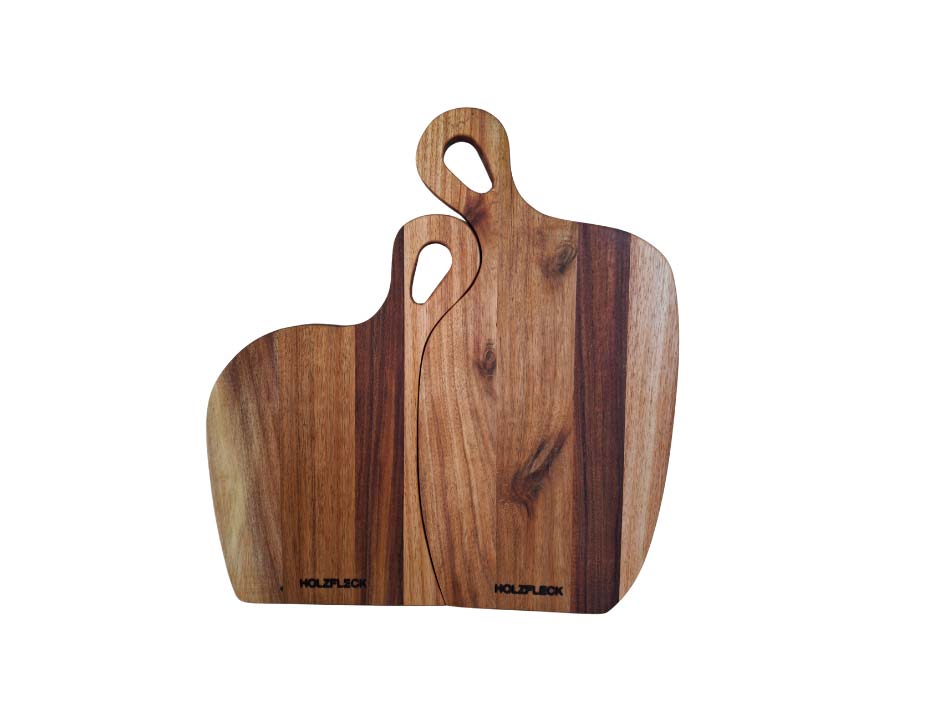
A good platter is not about expensive ingredients. It is about colour, height and generosity. Here is the formula we use when friends come round for a braai, and it works for any board from a small cheese board to a metre-long grazing spread.
- Start with the anchors. Place two or three cheeses first (one hard like cheddar or gouda, one soft like brie or camembert, one bold like blue or a peppadew cream cheese).
- Add the bowls. Fill bowl cut-outs or small dishes with chutney, olives, pickles or a dip. Spread them out so every side of the board has something wet.
- Bring the meat. Fan out sliced biltong, droëwors, salami or leftover sliced steak. Folding meat into loose ribbons adds height and looks generous.
- Fill the gaps with crunch. Crackers, rusks cut into fingers, toasted pita and a sliced baguette.
- Finish with colour. Grapes, sliced apple, cherry tomatoes, figs in season, nuts and a few sprigs of rosemary.
- Leave no wood showing. The secret of a “wow” board is abundance. Tuck small items into every gap.
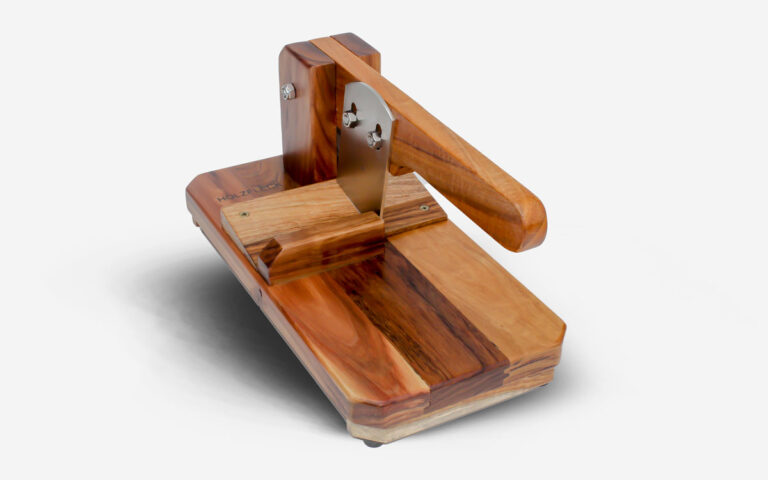
Braai-day bonus: Slice your biltong fresh at the table. A blackwood biltong cutter turns it into a bit of theatre, and our guide on how to choose a biltong cutter that lasts explains what to look for.
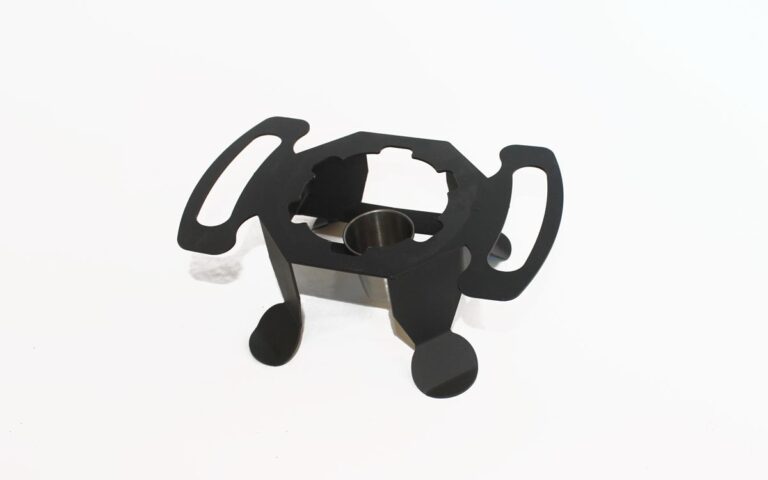
Hosting a sit-down dinner instead? Pair your boards with individual mini potjies at each place setting. Our step-by-step guide to cooking a mini potjie on a gel stand shows how guests can cook at the table, while the boards carry the bread and sides.
Caring for your board in 60 seconds, and when to replace it
A wooden board does not need fussing over. It needs a simple routine, done consistently:
- Scrape, wash by hand in warm soapy water, rinse and towel dry straight after use.
- Dry it standing upright so air reaches both sides. Never leave it lying flat in a puddle.
- Never soak it, and never put it in the dishwasher. Heat and water make wood swell, warp and crack.
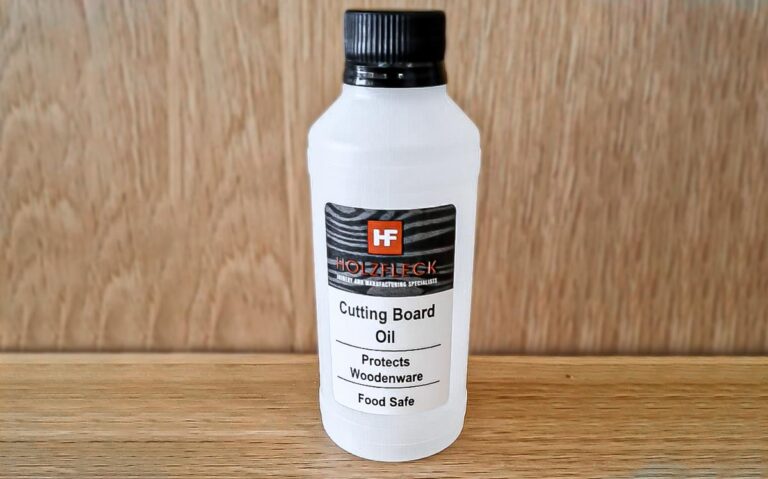
- Oil it about once a month, or whenever it looks pale and dry, with a food-safe cutting board oil. Skip olive and sunflower oil, which can go rancid.
For the full routine, including how to sanitise after raw meat and how to remove garlic and onion smells, read our guide to cleaning and oiling a wooden cutting board.
Signs it is time to sand or replace a board
- Deep knife grooves you cannot clean with a brush. Light sanding can bring the surface back on a thick board.
- Cracks or splits that open up along the grain.
- Persistent smells or dark stains that return after cleaning.
- Warping, so the board rocks on the counter. A rocking board is a safety risk when you cut.
A thick, solid board can be sanded back and re-oiled more than once, which is one of the reasons a good wooden board outlives several plastic ones.
Wooden boards as gifts: ideas for every budget
Boards make brilliant gifts because they are useful every day, look good and suit almost everyone: new homeowners, newlyweds, teachers, hosts, dads who braai and friends who love to cook. Here are ideas from our current range (prices at the time of writing):
- Under R150: the Cheese Board (R110) or Heart Cut Out Board (R120). These are perfect for secret Santa, teachers and colleagues.
- R150 to R300: Baguette Board with Handle (R170), Bread Board (R230), Pizza Board (R260) or Small Steak Board (R285).
- R300 to R500: the blackwood Homestead Set (R395), a Round Serving Board with 3 Bowls (R435), the Chopping Board (R485) or the Big Steak Board (R490).
- The braai master’s dream: the Blackwood Biltong Cutter (R750) with a steak board and a bottle of board oil.
Which board are you? The weekend braai master needs a grooved steak board. The Sunday baker needs a bread board. The entertainer needs a serving board with bowls. The serious home cook needs a heavy chopping board. And the person who says they need nothing? A cheese board. Everyone eats cheese.
Frequently asked questions
Is a wooden or plastic cutting board better?
Both can be used safely. Research led by UC Davis found fewer bacteria could be recovered from wooden boards than from plastic ones, and wood is kinder to knives and lasts longer. Plastic can go in the dishwasher, which is why some cooks keep one just for raw poultry. The most important rule is to use separate boards for raw meat and ready-to-eat food, and to replace any board once it is deeply grooved.
What is the best wood for a cutting board in South Africa?
A moderately hard, close-grained wood is ideal. Locally, plantation hardwoods such as saligna (Eucalyptus grandis) and dense timbers such as blackwood make excellent boards. Very soft woods scar quickly, and very hard woods or glass blunt your knives.
What is the difference between a cutting board and a chopping board?
The terms are often used interchangeably. In practice, a chopping board is usually thicker and heavier for meat and heavy prep, while a cutting board is lighter for everyday slicing of bread, fruit and vegetables.
Can a wooden board go in the dishwasher?
No. The heat and long soak make wood swell, warp and crack. Wash it by hand in warm soapy water, rinse, towel dry and stand it upright to dry completely.
How often should I oil a wooden board?
About once a month, or whenever the wood looks pale and dry. A brand-new board benefits from a few extra coats in its first weeks. Use a food-safe board oil, not cooking oil.
Why does my steak board need a groove?
The juice groove catches the juices that run out of meat while it rests and while you carve, so they stay on the board instead of running onto your table.
How do I get rid of onion or garlic smells?
Sprinkle coarse salt over the board, scrub it with half a lemon, leave it for a few minutes, then rinse and dry. Re-oil once it is completely dry.
How long does a wooden cutting board last?
With hand washing, regular oiling and the occasional light sanding, a solid wooden board can last many years. Replace it if it cracks, warps or develops deep grooves you cannot clean.
Ready to find your board?
Every board in our range is made by hand in our New Hanover, KwaZulu-Natal workshop and finished with food-safe Holzfleck board oil. Natural wood means every grain pattern is a little different, so your board will be one of a kind.